Collection: FAN LIGHTS
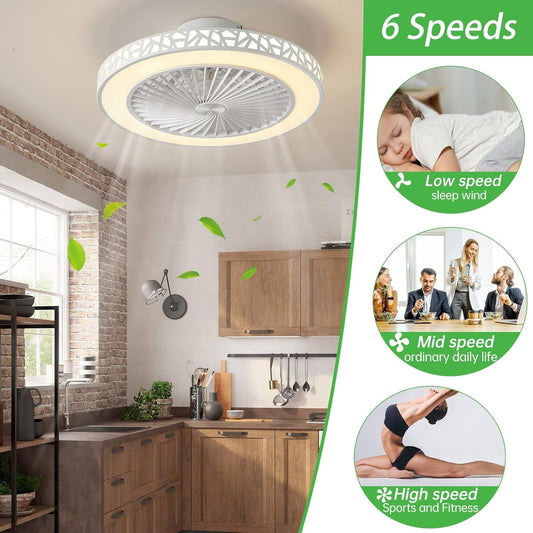
Fan lights (fandeliers) for Australian homes — cooling and lighting in one fixture. This collection covers ceiling fans with integrated LED light, from low-profile and bladeless designs to retractable-blade crystal fandeliers, for bedrooms, living areas and covered outdoor spaces.
How to choose a fan light
Match the blade span to the room: a compact 90–105cm fan suits a small bedroom or study, 120cm fits a typical 3.5m x 3.5m bedroom, and 132cm or larger suits open-plan living. Choose a DC motor for quieter running and lower energy use, and a low-profile (flush) design for standard 2.4m ceilings. For a covered veranda or alfresco, use an outdoor-rated fan with the correct IP rating for the position.
By room
- Bedrooms: a quiet DC motor with a dimmable, warm light — see the guide to the best fan light for an Australian bedroom.
- Living and open-plan: a larger blade span to move air across the volume.
- Year-round comfort: a reversible fan pushes cool air down in summer and circulates warm air in winter.
Retractable and invisible-blade fan lights
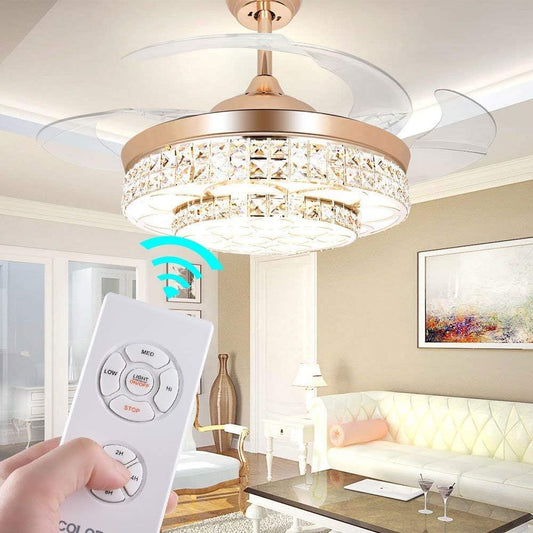
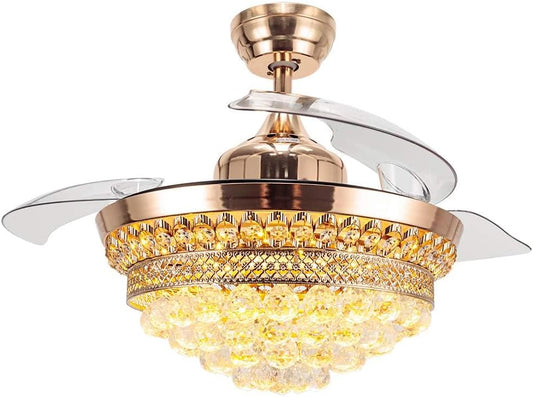
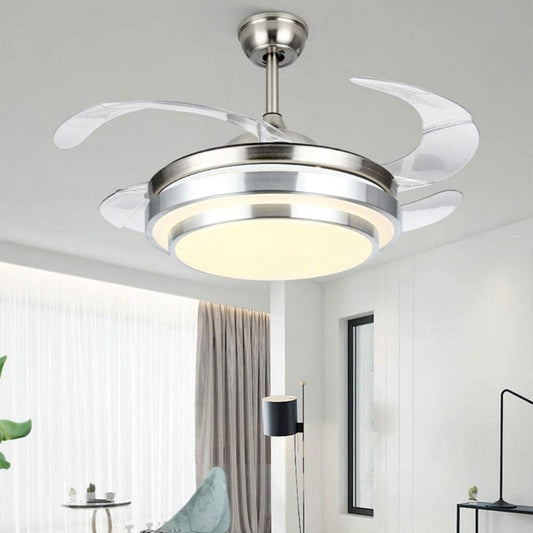
A retractable (invisible-blade) fandelier keeps its blades tucked inside the body until the fan is switched on, so the fixture reads as a light fitting when it is still. These suit dining rooms and formal living areas where a conventional blade span would dominate the room, and they are the practical way to get a ceiling fan with light in a space that really wants a chandelier.
Not sure a fan light is right? Compare fan lights against standalone ceiling fans. For rooms that need statement lighting instead, browse chandeliers and pendant lights.
Frequently asked questions
What size fan light do I need?
Match blade span to room size: around 90–105cm for a small room, 120cm for a standard bedroom, and 132cm-plus for open-plan living so the fan can move air effectively.
Are fan lights suitable for low ceilings?
Yes — choose a low-profile or flush-mount fan light designed to sit close to the ceiling, keeping safe clearance below on standard 2.4m ceilings.
Can a fan light be installed outdoors?
Only use a fan light rated for outdoor or covered use with an IP rating suited to the position, and have it installed by a licensed electrician under AS/NZS 3000.
Is a DC or AC fan light better?
A DC motor runs quieter, draws less power and usually offers more speed steps plus a winter reverse mode. An AC motor is simpler and often costs less. See the full comparison of DC vs AC ceiling fans with lights.
Which way should a ceiling fan spin?
Anticlockwise in summer to push a cooling draught down, and clockwise on a low speed in winter to circulate warm air without a breeze. See the seasonal fan direction guide.
Every Lume Designs fan light ships free across Australia and is backed by a 2-year warranty and 30-day returns.

-
Premium Gold Retractable Ceiling Fan Chandelier — Iron Crystal DC Motor
Regular price $799.00Regular price -
42" Retractable Ceiling Fan Chandelier — Gold Crystal Hidden Blades Fandelier
Regular price $679.00Regular price -
42" Invisible Reversible Ceiling Fan with LED Lights — Black Crystal
Regular price $666.00Regular price -
42" Retractable Ceiling Fan Chandelier — Silver Hidden Blades Silent DC Motor
Regular price $699.00Regular price -
Low Profile Flush Mount Bladeless Ceiling Fan — 72W LED Dimmable 6-Speed
Regular price $449.00Regular price -
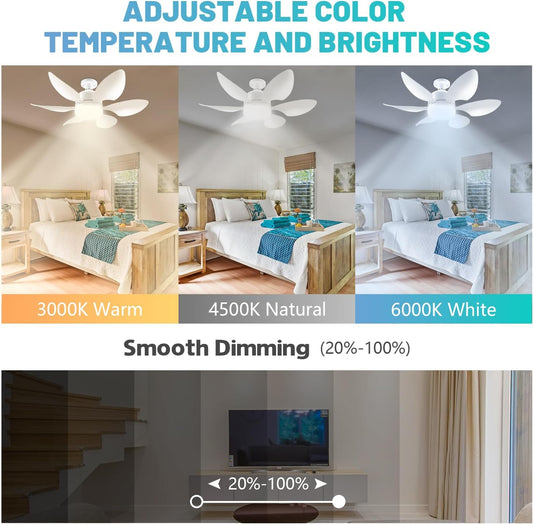
E27 Screw-In Ceiling Fan Light — No Installation 3-Speed 3-Colour Remote
Regular price $699.00Regular price -
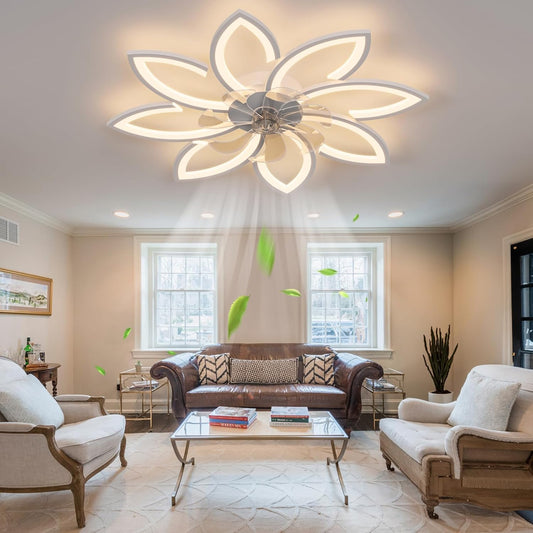
Modern White Acrylic Ceiling Fan with LED Light — Silent Remote Control
Regular price From $407.00Regular price$461.00Sale price From $407.00SAVE 11% -
Dimmable Crystal Ceiling Fan with LED Light — App & Remote Control
Regular price From $519.00Regular price -
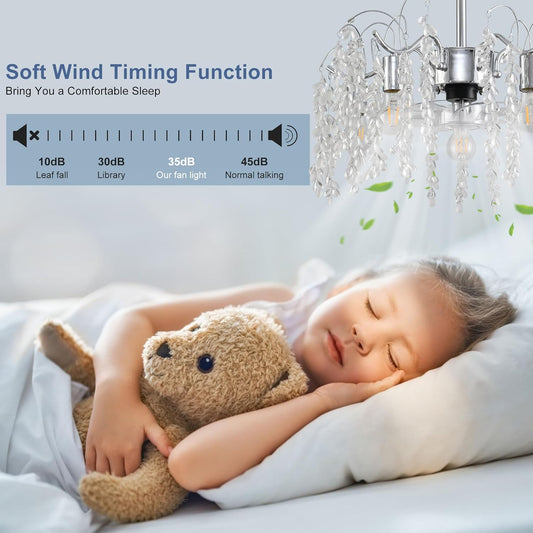
Crystal Chandelier Ceiling Fan with Light — Remote & App Control
Regular price From $407.00Regular price$461.00Sale price From $407.00SAVE 11%